Buy New Build Homes in San Antonio: A Buyer's Guide
Want to buy new build homes in San Antonio? Get expert buying tips and personalized guidance from REALTOR® Delcina Smith. Schedule a consultation today.
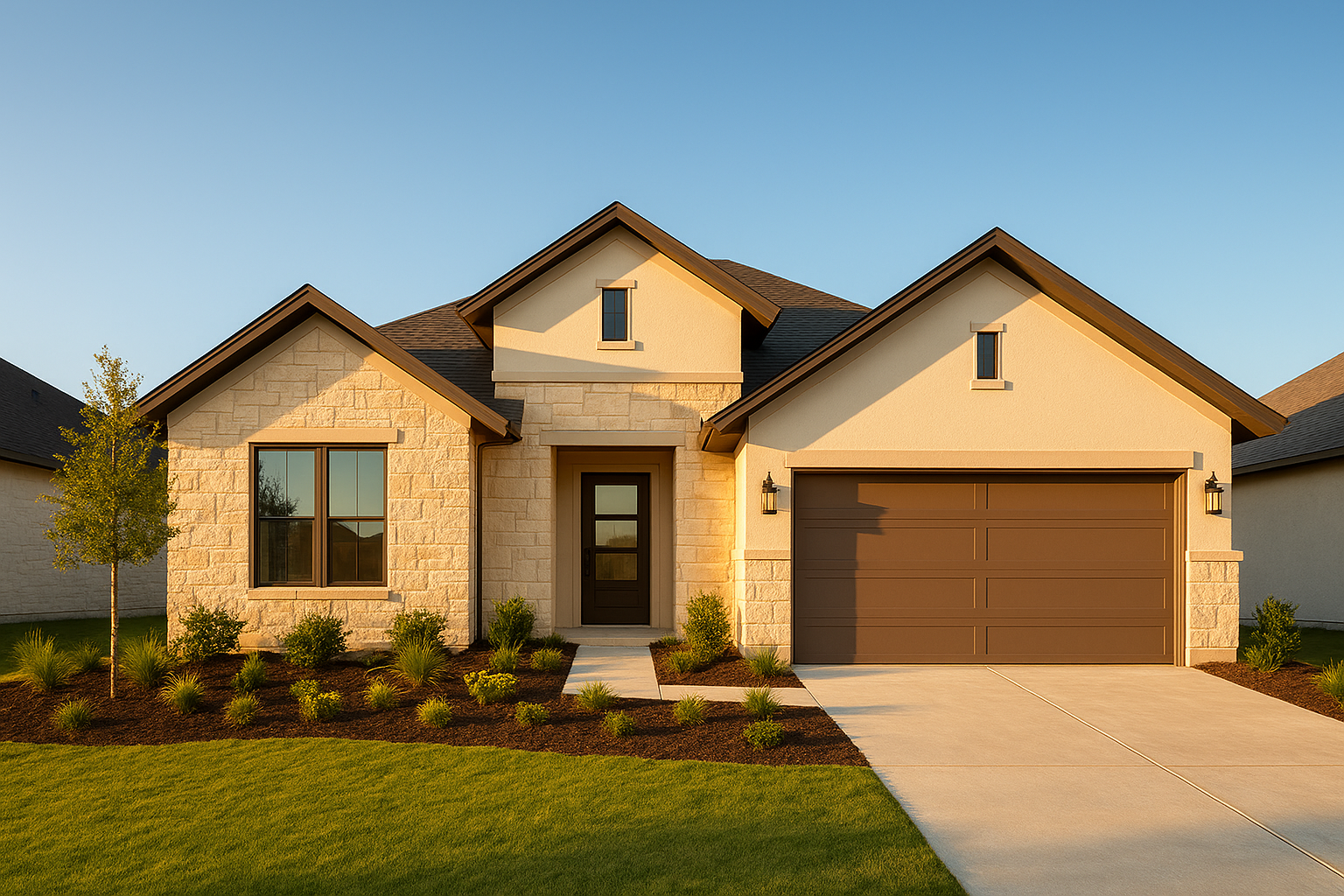
If you plan to buy new build homes in San Antonio, you need a clear picture of the benefits, the trade-offs, and the exact steps involved before you sign anything. New construction attracts buyers who want modern layouts, energy-efficient systems, and the freedom to choose their own finishes before move-in day. However, the process looks different from a resale purchase in several important ways — financing, negotiation leverage, and timeline all shift. Below, this guide walks through everything from builder contracts and inspections to local neighborhoods and financing, so you can buy new build homes in San Antonio with total confidence.
Buyers exploring new construction communities often buy new build homes for modern layouts and energy-efficient features.
What Does It Mean to Buy New Build Homes?
To buy new build homes means purchasing a brand-new property that has never had a previous owner, typically bought directly from a homebuilder or developer rather than through a traditional resale listing. In most cases, the sale happens before construction starts, during the build, or shortly after completion.
In San Antonio specifically, new construction ranges from large master-planned communities built on repeating floor plans to smaller infill lots with one-off designs. Many of these communities fall under what is broadly known as tract housing, a term describing groups of similarly designed homes built across a development. For example, a spec home — a house built speculatively without a confirmed buyer — is common in larger subdivisions, while custom builds are typically reserved for luxury lots. According to U.S. Census Bureau data on new residential sales, demand for new construction has remained a significant share of the national housing market in recent years, which helps explain why builders continue expanding in growing metro areas like San Antonio.
Why San Antonio Buyers Choose New Construction Over Resale
Similarly, many buyers choose new construction over resale homes for several practical reasons. First, newly built homes typically meet current energy codes, which can mean lower utility bills compared with older housing stock. In addition, most builders include a limited warranty covering major systems and structural components for a set period after closing.
Furthermore, buyers often appreciate the ability to select finishes — flooring, countertops, cabinet colors — before the home is complete. This level of customization is rarely available with a resale purchase. For growing families who need extra bedrooms or home offices, new construction floor plans frequently include flexible spaces designed for modern living.
On the other hand, upgrades can add up quickly, and model homes often display options well beyond the base price. As a result, it is important to set a firm budget before touring communities and to clarify exactly what is included in the base price versus what counts as an upgrade.
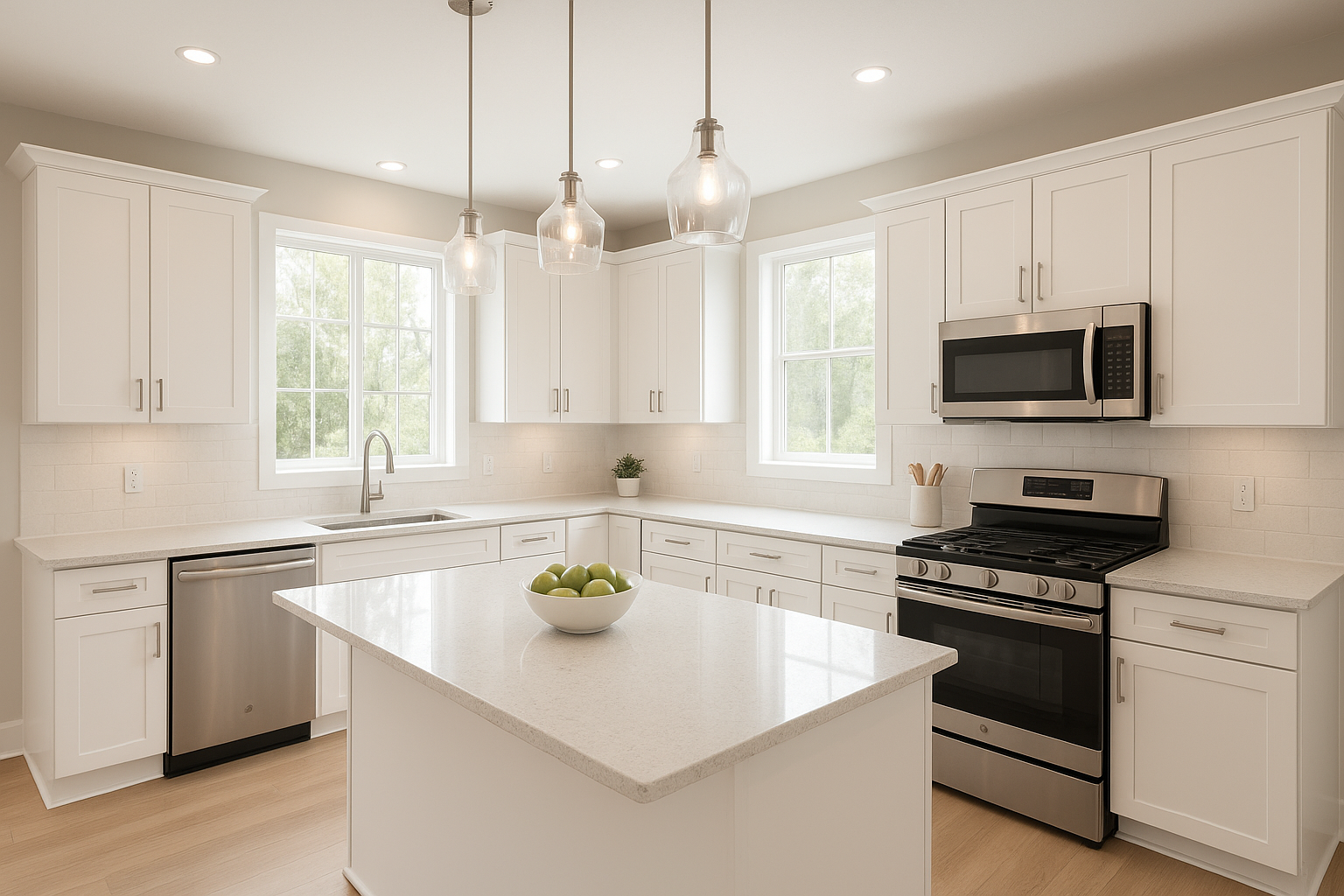
Touring model homes helps buyers compare upgrade options before they buy new build homes.
San Antonio's New Construction Market at a Glance
San Antonio continues to rank among the faster-growing metro areas in Texas, and that growth fuels steady builder activity across the North Side, far West Side, and surrounding suburbs. Consequently, buyers who want to buy new build homes here typically find more active subdivisions, more floor plan variety, and more builder competition than in slower-growth markets. In particular, the National Association of Home Builders (NAHB) tracks regional construction trends that show how builder incentives and pricing shift with interest rates and material costs — information that is directly useful when timing a purchase.
Above all, inventory in San Antonio spans every price point, from entry-level tract homes in master-planned communities to custom estates on acreage lots. Therefore, the first step toward a smart purchase is narrowing down which segment — production builder, semi-custom, or full custom — actually matches your budget and timeline.
Pros and Cons of Buying a Newly Built Home
Before moving forward, it helps to weigh the pros and cons honestly, since no option fits every buyer equally well.
Advantages of a newly built home:
- Modern, energy-efficient systems that can lower monthly utility costs
- Builder warranty coverage for workmanship and major systems
- Ability to customize finishes and floor plan options
- Fewer immediate repair needs compared with older homes
Trade-offs to consider:
- Higher upfront price in many markets compared with resale
- Longer closing timelines, especially for homes built from the ground up
- Limited negotiation room on the base price itself
- Ongoing construction noise if nearby homes are still being built
For a broader look at weighing these trade-offs, Delcina Smith's buying and selling tips page covers additional considerations that apply to both new construction and resale purchases.
Step-by-Step: How to Buy New Build Homes in San Antonio
Once you have decided to move forward, following a clear process can prevent costly mistakes. Below is a step-by-step approach to buy new build homes with confidence.
- Get pre-approved with a construction-savvy lender. Get pre-approved with a lender experienced in new construction financing so you understand your true budget before touring model homes or signing a contract.
- Research the builder's reputation. Research builder reputation, warranty terms, and completed communities in San Antonio to confirm quality and reliability before committing to a specific neighborhood.
- Review the floor plan and included features. Review the floor plan, structural options, and included features carefully, then compare upgrade costs against what similar resale homes already include.
- Negotiate upgrades and incentives. Negotiate upgrades, closing cost credits, and move-in incentives with the builder's sales representative, since pricing on new construction is often more flexible than buyers expect.
- Schedule independent inspections. Schedule a pre-drywall inspection and a final walkthrough with an independent inspector to catch issues before walls are closed and before closing day.
- Close and confirm warranty coverage. Close on the home, confirm the builder warranty coverage in writing, and keep all documentation in case repairs are needed during the first year.
New Build vs. Resale: Key Differences to Consider
When comparing new construction to resale, financing is often the first difference buyers notice. Because new homes may not be complete at the time of contract, some lenders require a construction-to-permanent loan — financing that converts from a short-term construction loan into a standard mortgage once the home is finished. For general guidance on closing costs, loan estimates, and the mortgage process, the Consumer Financial Protection Bureau's owning a home resources offer plain-language explanations that apply to both new and resale purchases.
In addition, negotiation looks different. Resale sellers may negotiate directly on price, while builders more often negotiate through incentives and upgrades. Similarly, inspections matter in both cases, but new construction buyers sometimes skip this step, assuming a brand-new home has no issues. That assumption is one of the most common and costly mistakes buyers make.
| Factor | New Construction | Resale Home |
|---|---|---|
| Price negotiation | Mostly through incentives/upgrades | Direct price negotiation common |
| Timeline to close | Weeks to several months | Typically 30–45 days |
| Condition | New systems, builder warranty | Varies; may need repairs/updates |
| Customization | Finish and layout options available | Limited to post-purchase renovation |
| Financing | May require construction-to-permanent loan | Standard mortgage financing |
Financing a New Build Home: What San Antonio Buyers Should Know
Financing is where many first-time buyers feel the most uncertainty when they decide to buy new build homes. Builders frequently offer their own preferred lender with closing cost credits or rate buydowns attached. However, it is wise to compare that offer against at least one outside lender, since shopping around often reveals better terms or lower fees overall.
Earnest money also works a little differently in new construction. Specifically, it is a deposit paid upfront to show the builder you are serious, and it is typically credited toward your down payment at closing. In particular, amounts and refund conditions vary by builder, so review the contract closely before you sign. For buyers using FHA, VA, or USDA financing, confirm early that the builder and specific community are approved for that loan type, since not every subdivision qualifies for every program.
Energy Efficiency, Warranties, and What's Actually Covered
Most builders offer a limited warranty covering workmanship, systems, and structural components for a set period, often one to ten years depending on the item. Always get the warranty terms in writing before closing, and ask specifically what is excluded, since exclusions vary widely between builders.
In addition to warranty coverage, many new builds now meet voluntary efficiency standards beyond the minimum code. For instance, the ENERGY STAR certified new homes program outlines independently verified efficiency requirements that can translate into real utility savings. Therefore, it is worth asking a builder directly whether their homes carry this certification or a similar third-party rating before you buy new build homes in a given community.
Common Mistakes to Avoid When Purchasing New Construction Properties
Despite the appeal of a brand-new home, several recurring mistakes can cost buyers time and money. First, skipping an independent inspection is risky, since builder crews can overlook defects during a busy build schedule. Second, buyers sometimes assume the builder's on-site sales agent represents their interests, when in fact that agent works for the builder.
Furthermore, underestimating upgrade costs is a frequent problem, because model homes almost always include premium options beyond the base price. Finally, failing to read the warranty and contract terms closely can leave buyers unprepared if repairs are needed later. Consequently, having a knowledgeable advocate review these documents before signing is one of the smartest steps a buyer can take.

Having a REALTOR® review the contract is an important safeguard when buyers buy new build homes.
Best San Antonio Areas for New Construction
San Antonio's growth corridors give buyers a wide range of settings to buy new build homes. The far North Side and Stone Oak area tend to attract buyers who want top-rated schools and established retail nearby. Meanwhile, the West Side near Alamo Ranch offers newer master-planned communities with a mix of starter and move-up floor plans.
Similarly, suburbs such as Schertz, Cibolo, and Converse to the northeast continue to see active building as commuters look for newer homes at a lower price point than the inner loop. In contrast, buyers who want more acreage and custom-build flexibility often look toward the Hill Country fringe communities. Because inventory and pricing shift by season and builder phase, working with a local REALTOR® who tracks these communities closely is the fastest way to find the right fit.
Glossary: New Construction Terms Every Buyer Should Know
- Spec home: A house a builder constructs speculatively, without a confirmed buyer, often available for a faster close.
- Model home: A furnished example home used to showcase a builder's floor plans and finish options, sometimes sold later at a discount.
- Pre-drywall inspection: An inspection performed after framing and rough mechanicals are complete but before walls are closed, catching issues that become invisible later.
- Punch list: A list of small defects or unfinished items identified at the final walkthrough that the builder agrees to fix before or shortly after closing.
- HOA and CC&Rs: The homeowners association and its covenants, conditions, and restrictions, which govern what you can build, park, or display on your property.
- Construction-to-permanent loan: Financing that starts as a short-term construction loan and automatically converts into a standard mortgage once the home is complete.
How a REALTOR® Helps When You Buy New Construction Homes
Because the builder's sales representative represents the builder, having your own REALTOR® matters. Delcina Smith, a REALTOR® and real estate salesperson with CENTURY 21 Integra, has spent eight years helping buyers and sellers across San Antonio, bringing prior banking-industry experience to contract and financing conversations. She also works with a trusted mortgage lender and title company, which can help streamline the closing process on a new build.
Above all, her approach is personalized rather than one-size-fits-all. She reviews floor plans, negotiates upgrade and incentive terms, coordinates inspections, and explains each step clearly so buyers feel confident from contract to closing. You can reach her directly at (210) 974-4641, through the office at (210) 979-6700, by email at delcina.smith@c21integra.com, or through delcinasmithrealtor.com.
Buying New Build Homes for Every Stage of Life
New construction suits a wide range of buyers, though priorities differ by situation. First-time buyers often value predictable maintenance and energy savings, while growing families may need extra bedrooms or flexible living space. In particular, families comparing options can browse homes for sale in San Antonio to weigh current new-build inventory against resale listings.
Meanwhile, empty nesters looking to downsize into a smaller, low-maintenance new build should review this guide on assisting empty nesters looking for smaller homes for additional perspective. Investors, too, often buy new build homes for their lower near-term maintenance needs and strong rental appeal in growing San Antonio neighborhoods.
Finally, buyers drawn to upscale new construction should read buying a luxury home in San Antonio: what to consider before you buy, and compare it with what's the difference between residential and luxury real estate to understand how luxury new builds differ from standard residential new construction.
Frequently Asked Questions About Buying New Build Homes
What does it mean to buy new build homes?
Buying new build homes means purchasing a newly constructed property that has never been lived in, often directly from a builder or developer. In San Antonio, this can include tract homes in a planned community or custom builds on an individual lot.
How long does it take to buy new build homes in San Antonio?
The timeline typically ranges from a few weeks for a near-complete spec home to six months or more for a home built from the ground up. Weather, permitting, and material availability can also affect the schedule.
Are new build homes more expensive than resale homes?
New build homes often carry a higher upfront price than comparable resale homes, but they typically require fewer immediate repairs or updates. Builder incentives, such as covered closing costs, can help offset the difference.
Can I negotiate the price of a new construction home?
Yes, though builders are often more willing to negotiate incentives, upgrades, or closing costs rather than the base price itself. This flexibility tends to increase near the end of a sales phase or fiscal quarter.
What inspections should I get on a newly built house?
Even new construction should have a pre-drywall inspection and a final walkthrough inspection performed by an independent, licensed inspector. These steps catch issues the builder's own inspections might miss.
Do new build homes come with a warranty?
Most builders offer a limited warranty covering workmanship, systems, and structural components for a set period, often one to ten years depending on the item. Always get the warranty terms in writing before closing.
Is it a good idea for first-time buyers to buy new build homes?
Yes, first-time buyers often appreciate new construction because of lower maintenance needs and modern energy-efficient systems. However, they should still budget for landscaping, blinds, and other items builders may not include.
Can investors buy new build homes as rental property?
Yes, many investors buy new build homes specifically because of lower near-term maintenance costs and strong rental demand in growing markets like San Antonio. It is worth checking HOA rental restrictions before purchasing.
What is earnest money in a new construction contract?
Earnest money is a deposit paid upfront to show the builder you are serious about the purchase, and it is typically credited toward your down payment at closing. Amounts and refund conditions vary by builder, so review the contract closely.
Should I use the builder's preferred lender?
The builder's preferred lender may offer incentives, but it is wise to compare rates with at least one outside lender first. Shopping around often reveals better terms or lower fees.
What upgrades are worth paying for in a new build home?
Structural upgrades, such as extra outlets or layout changes, are usually worth paying for during construction since they are far more expensive to add later. Cosmetic upgrades like lighting fixtures can often be added after closing for less money.
How is buying new build homes different in the luxury market?
Luxury new construction often involves more customization, longer timelines, and higher-end finish selections than standard tract homes. Buyers in this segment should budget extra time for design decisions and site visits.
What mistakes should buyers avoid when they buy new build homes?
Common mistakes include skipping independent inspections, underestimating the cost of upgrades, and failing to read the builder's warranty and contract terms closely. Working with a buyer's agent helps avoid these pitfalls.
How can a REALTOR® help when I buy new build homes?
A REALTOR® represents your interests throughout negotiations, reviews builder contracts, and coordinates inspections, since the builder's on-site sales agent represents the builder, not the buyer. This guidance is especially valuable for first-time new construction buyers.
What's the difference between a spec home and a model home?
A spec home is a completed or nearly completed house built without a confirmed buyer, while a model home is a fully furnished example home builders use to showcase floor plans and upgrades, and it is sometimes sold later at a discount.
Will a new construction home appraise for the purchase price?
New construction often appraises at or near the contract price because builders set pricing based on current costs and comparable sales in the community, though buyers should still include an appraisal contingency when possible.
What is typically included in the base price of a new build home?
The base price usually covers the standard floor plan, basic finishes, and required systems, while items like upgraded flooring, fencing, and landscaping are frequently considered extras.
Final Thoughts: Ready to Buy New Build Homes in San Antonio?
In summary, choosing to buy new build homes can be a smart move for first-time buyers, growing families, investors, and luxury buyers alike, provided the process is approached with a clear plan. From financing and inspections to upgrade negotiations and warranty review, each step benefits from careful attention and, above all, from an advocate who represents only your interests. Delcina Smith brings eight years of San Antonio real estate experience, a banking background, and a personalized approach to every client's needs, timeline, and goals. Whether you are ready to buy new build homes now or simply exploring options, reach out at (210) 974-4641 or through delcinasmithrealtor.com to schedule a personalized consultation.
